
Finding the right early education setting for your little one is often a stressful milestone for families. The transition from home care to a structured environment involves countless decisions and a fair amount of anxiety. As parents, we want to ensure our children are safe, happy, and thriving in a space that feels like an extension of their home. It is common to start the process by evaluating the most obvious essentials. Having an ultimate checklist for selecting childcare centres helps cover foundational criteria like safety standards, staff accreditation, and daily nutrition. However, once those baseline requirements are met, it is time to look at a less obvious, yet incredibly critical, factor. The day-to-day group dynamics and class sizes play a massive role in how a toddler develops, learns, and builds early relationships.
Read more: Choosing the Right Childcare in Port Stephens: A Complete Guide for Families
Moving Beyond Baseline Compliance
In Australia, the early childhood sector is highly regulated. According to recent data from the Australian Children’s Education and Care Quality Authority, over 90 percent of early childhood education and care services nationally are rated as Meeting or Exceeding the National Quality Standard. Because the vast majority of centres hit these high safety benchmarks, parents need to look beyond standard compliance to find the best fit. This assessment process evaluates educational program practice and relationships with children as critical quality areas, both of which demonstrate much stronger outcomes in settings with intentionally low child-to-educator ratios.
When evaluating your local options, whether you are simply searching online for a daycare in Penrith or researching boutique facilities in another suburb, inquiring about daily group sizes should be your top priority. Under the National Quality Framework in New South Wales, the mandated minimum educator-to-child ratio is 1:4 for babies under two and 1:5 for toddlers aged two to three. While these are the legal minimums, high-quality, boutique centres purposefully design their environments to offer even more personalised attention, deliberately avoiding the crowded, corporate approach to early learning.
The Developmental Science of Small Groups
The benefits of keeping childcare rooms small are not just anecdotal. They are strongly backed by rigorous developmental psychology and educational research. For instance, a notable academic paper from Yale University evaluating early childhood attendance demonstrated that enforcing strict staff-to-child ratios and capping toddler groups led to a significant increase in long-term cognitive and mathematical achievements. When young learners are not lost in a crowd, they receive the individualised feedback necessary to build critical thinking skills.
Beyond academic outcomes, the emotional wellbeing of children in smaller groups is significantly improved. Longitudinal tracking of toddler stress hormones has shown that mid-morning to mid-afternoon cortisol levels consistently increase in standard, large-group childcare settings but decrease at home. Toddlers spending eight to nine hours in a crowded room can experience cortisol stress levels up to 30 percent higher than those in more intimate care environments. This means that capping room sizes is absolutely vital for emotional regulation during full-day care.
When you choose a centre that prioritises smaller, close-knit groups, your child experiences several tangible advantages:
- Lower Background Noise: Small group sizes dramatically reduce background classroom noise. This is an environmental irritant linked to poor cognitive focus, reading deficits, and elevated stress in early childhood.
- Accelerated Language Development: Toddlers receive more targeted language support. Educators have the time to pause, actively listen, and wait for responses. This helps build communication confidence and expands vocabulary.
- Increased Emotional Security: Lower child-to-staff ratios are scientifically associated with higher caregiver sensitivity. This directly correlates with a child feeling secure and engaging in positive peer interactions.
- Smooth Transitions: Maintaining continuity of care within a tight-knit environment limits the frequency of transitions between large rooms, significantly reducing the emotional disruption toddlers face when adapting to new faces.
Fostering Confidence Through Specialised Programs
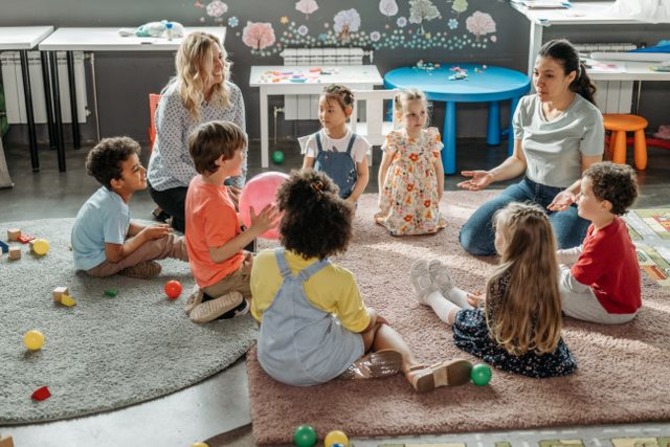
The Australian Early Years Learning Framework heavily emphasises the need to balance child-directed play with intentional teaching. This pedagogical goal is significantly easier to achieve when focused learning groups are kept to just two to four children at a time. Intimate settings allow educators to deeply understand each child’s unique interests and tailor daily activities accordingly. In a smaller group, an educator can adjust the lesson based on the toddler’s immediate reactions and curiosity, rather than sticking to a rigid schedule designed for a crowd of twenty.
Furthermore, boutique early learning centres frequently leverage their small sizes to introduce specialised curriculum inclusions. Comprehensive performing arts, drama, and public speaking programs can be intimidating for young children in massive corporate settings. However, participating in storytelling and musical movement is strongly linked to enhanced emotional empathy and problem-solving capabilities. When a child feels emotionally safe in a supportive, closely monitored group, they are far more likely to step out of their comfort zone and participate joyfully.
Making the Right Choice for Your Family
Selecting a childcare environment is a deeply personal decision that shapes a young learner’s foundational years. Every child has unique needs, and understanding how different settings impact their daily lives is empowering for parents. While state regulations ensure a baseline of physical safety and educational structure, the emotional and cognitive benefits of a boutique, small-group setting are undeniable. By prioritising low ratios and intimate learning spaces over corporate scale, you give your toddler the gift of focused attention, lower stress, and a truly supportive foundation for their earliest learning experiences. Ultimately, a smaller group size translates to a bigger, more positive impact on your child’s journey into the world of education.