

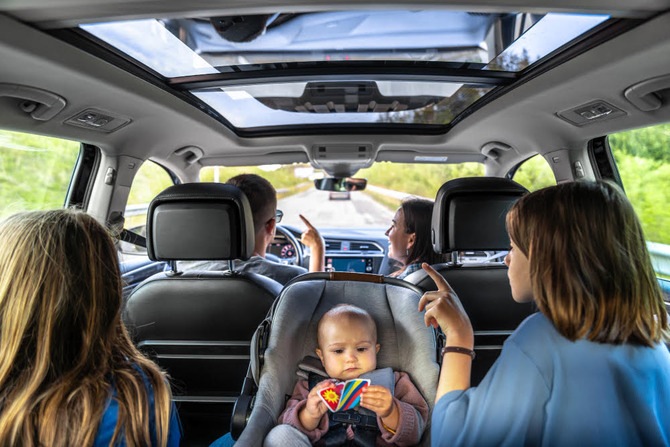
Taking a family road trip during the Australian summer is a brilliant way to build lifelong memories. However, travelling with an infant introduces a whole new set of challenges for parents. The intense heat, glaring sun, and long stretches of highway require careful planning to ensure your youngest passengers remain safe, happy, and comfortable throughout the journey.
Before addressing temperature control, reviewing general highway safety is a fundamental step for any family vacation. Navigating regional roads often means sharing the asphalt with large commercial vehicles. If you are preparing for a long drive, taking the time to read a family’s guide to driving safely around semi-trucks will give you the confidence needed to handle blind spots and highway passing safely. With your driving strategy sorted, you can focus on the environment inside the cabin.
Read more:
- Family Road Trips Start Here: Should You Buy a Used or New Truck?
- Preparing for Baby’s First Road Trip: A Practical Checklist
- Planning and Packing: Key Tips for Successful Family Road Trips
- How to Plan a Stress-Free Family Vacation for Summer 2026 (Starting Today)
Understanding Your Baby’s Unique Vulnerability to Heat
While adults might find a warm car slightly uncomfortable, the stakes are significantly higher for young children. On a typical summer day, the temperature inside a parked vehicle can reach 20 to 30 degrees hotter than the outside air. Surprisingly, about 75 percent of a car’s total temperature rise occurs within the first five minutes of closing the doors. Tests demonstrate that leaving a window open slightly does very little to cool the cabin.
Infants are particularly at risk because their bodies process heat differently. According to the government-backed Pregnancy Birth and Baby service, infants do not sweat as much as adults and cannot regulate their body temperature as effectively. This biological difference means they face a severe risk of heat-related illness in babies, including rapid dehydration and heatstroke, making cabin temperature management absolutely critical on long trips. A child’s core body temperature can actually rise three to five times faster than an adult’s.
Shielding Sensitive Skin from Harmful UV Rays
Keeping the car physically cool is only half the battle. Protecting your infant from direct sunlight is just as important for their long-term health. Health experts strongly advise that babies under twelve months old should be kept out of direct sunlight whenever the UV Index reaches a level of three or higher. Because routine sunscreen use is not recommended for babies under six months old due to their absorptive skin, physical barriers are essential.
Standard vehicle side windows allow a substantial amount of UV radiation to pass through the plain glass. This exposure can easily lead to indirect sunburns during prolonged drives. Securing UPF-rated window shades for baby to the rear windows is a highly effective way to block glare and harmful solar radiation. By seeking shade inside the car, you create a safer environment for their vulnerable skin while reducing the ambient heat around their car seat.
Practical Steps for a Cool and Comfortable Drive
Managing your car’s environment takes a bit of proactive effort. To help you prepare for a stress-free journey, here are a few actionable strategies to keep your little one comfortable from departure to your final destination.
- Time your travel hours carefully. Plan to tackle the longest driving stints during the early morning or late afternoon. Travelling when ambient temperatures and the UV Index are at their lowest drastically reduces the strain on your vehicle’s air conditioning and your baby’s comfort levels.
- Schedule frequent rest stops. The Australian Government Department of Health recommends that infants should not be continuously restrained in a car seat for more than one hour at a time without a break. Use these stops to lift them out of the seat, let their skin breathe, and allow them to stretch in a shaded area.
- Pre-cool the vehicle before boarding. Run the air conditioning for several minutes before placing your baby into their car seat. The heavy fabrics and foam padding of modern child restraints can trap significant amounts of body heat, so ensuring the seat itself feels cool to the touch is vital.
- Dress your baby appropriately for the climate. Opt for lightweight, breathable cotton clothing. It is very easy to overdress an infant out of habit, but a single, loose layer is often all they need in a climate-controlled car.
- Monitor their hydration constantly. Offer extra breastmilk or formula feeds during your scheduled breaks. For babies old enough to drink water, keep a cool sippy cup within easy reach and encourage regular sips to prevent dehydration.
Every parent wants their summer getaway to be relaxing and fun. By understanding the risks of the Australian heat, using the right gear, and pacing your drive, you can protect your baby from the elements. With a little extra preparation and mindfulness, your next family road trip will be safe, cool, and filled with wonderful memories.