

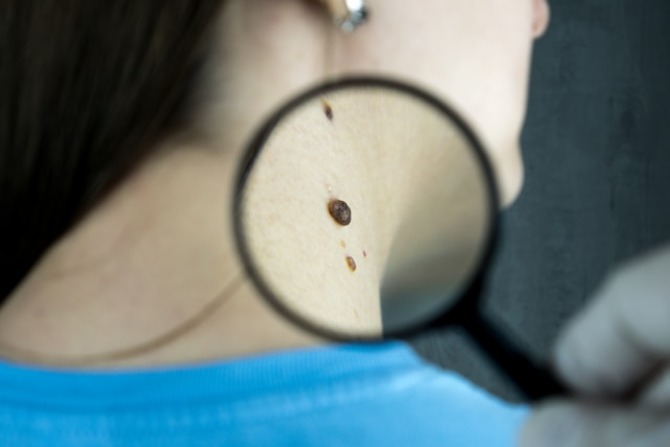
Skin cancer conversations usually begin with prevention. Sunscreen, protective clothing, yearly skin checks. All important, obviously. But once a suspicious spot is diagnosed, the focus shifts very quickly from prevention to treatment decisions.
That is where many people first hear about Mohs surgery.
For patients in places like Northern Colorado, where higher elevation can increase long-term UV exposure, dermatologists often monitor recurring sun damage closely during skin exams. Certain skin cancers respond particularly well to Mohs surgery because the procedure removes cancerous tissue layer by layer while preserving as much healthy skin as possible.
Not every type of skin cancer requires it. Still, there are several situations where doctors commonly recommend this approach because of its precision and high cure rates
Read more: Will making good lifestyle choices prevent all diseases?
1. Basal Cell Carcinoma
Basal cell carcinoma is the most common skin cancer treated with Mohs surgery, and many cases initially appear far less serious than they actually are. These cancers often develop slowly and may look like a small pearly bump, a patch that refuses to heal, or irritation people mistake for dry skin or eczema. Because the visible changes can seem minor at first, some patients delay getting evaluated longer than they probably should.
The challenge is that basal cell carcinomas can continue spreading beneath the surface even when the outer appearance remains relatively small. Practices like Altitude Dermatology, which serves patients across three Northern Colorado locations, are part of a broader dermatology field focused on treating skin cancers while preserving as much healthy surrounding tissue as possible, particularly in sensitive facial areas.
That precision matters quite a bit during treatment planning. Removing too little tissue can increase the risk of recurrence, while removing too much may affect appearance or function around areas like the nose, lips, ears, eyelids, or scalp where preserving healthy skin becomes especially important.
2. Squamous Cell Carcinoma
Squamous cell carcinoma behaves differently from basal cell carcinoma in a few important ways.
It tends to grow more aggressively and carries a higher risk of spreading deeper into surrounding tissue or, in some cases, beyond the skin itself. Areas with frequent sun exposure such as the face, neck, scalp, forearms, and hands are especially common sites.
Some squamous cell carcinomas appear as rough scaly patches. Others become raised growths or sores that bleed repeatedly and refuse to heal fully.
People sometimes mistake them for stubborn skin irritation for months before seeking evaluation.
Mohs surgery is frequently recommended for higher-risk squamous cell carcinomas because the layer-by-layer tissue examination helps doctors confirm that cancer cells have been completely removed before reconstruction begins.
That immediate microscopic review is one of the major reasons the procedure remains widely used for facial skin cancers in particular.
3. Recurrent Skin Cancers
Skin cancers that return after previous treatment often become more complicated to manage the second time around.
The visible spot may look small while hidden cancer cells extend unpredictably beneath scar tissue left from earlier procedures. Standard excision methods sometimes struggle to fully map those irregular growth patterns.
That is where Mohs surgery tends to offer an advantage.
Because tissue margins are checked continuously during the procedure, surgeons can track exactly where cancer cells remain instead of estimating removal boundaries based only on visual appearance.
Recurrent cancers also carry emotional weight for patients.
Many people feel frustrated or anxious learning a cancer they thought was resolved has returned. The precision of Mohs surgery often helps provide reassurance that the affected tissue is being examined carefully throughout the process.
Especially in highly visible areas.
4. Skin Cancers Located on the Face
Location matters almost as much as cancer type when determining treatment options.
A small cancer on the back or shoulder may allow for wider removal margins without major cosmetic concern. A similarly sized lesion on the nose, eyelid, or lip creates very different considerations.
The face contains structures where preserving healthy tissue becomes especially important.
That includes:
- Eyelids
- Nose
- Lips
- Ears
- Scalp
- Cheeks
- Forehead
Even minor tissue loss can affect appearance, facial symmetry, or normal function depending on the exact location.
Mohs surgery is commonly chosen in these situations because it removes tissue gradually and selectively instead of taking large surrounding margins immediately. Patients often appreciate that balance between effective cancer treatment and tissue preservation, particularly for highly visible areas.
And honestly, many people worry about scarring just as much as the cancer diagnosis itself.
That concern is understandable.
5. Aggressive or Fast-Growing Skin Cancer Subtypes
Not all basal or squamous cell carcinomas behave the same way.
Certain subtypes grow more aggressively beneath the skin or develop irregular borders that make them harder to remove completely using traditional excision alone. Others invade nerves or deeper structures more readily than slower-growing forms.
Doctors may recommend Mohs surgery more strongly in these higher-risk situations because the detailed margin analysis improves the chances of complete removal during a single procedure.
Aggressive growth patterns can also make cancers appear smaller externally than they truly are underneath the surface.
That disconnect surprises many patients.
A spot that looked relatively minor during the initial biopsy may require a larger surgical area once the full extent becomes visible under microscopic examination.
Mohs surgery helps manage that uncertainty more precisely than many other treatment methods.
6. Certain Rare Skin Cancers
Although basal and squamous cell carcinomas make up the majority of Mohs cases, some less common skin cancers may also be treated using this technique depending on location and behavior.
Examples sometimes include:
- Dermatofibrosarcoma protuberans
- Sebaceous carcinoma
- Merkel cell carcinoma in select cases
- Certain melanoma situations under specialized protocols
These cancers are less common, but they often require careful tissue preservation and close margin control due to aggressive growth characteristics or sensitive anatomical locations.
Treatment decisions become more individualized here.
Factors like tumor depth, size, location, pathology findings, and patient health history all influence whether Mohs surgery is considered appropriate.
That is why dermatologic evaluation matters so much early in the diagnosis process.
Conclusion
Mohs surgery is commonly used for skin cancers where precision matters most. Basal cell carcinoma, squamous cell carcinoma, recurrent tumors, aggressive subtypes, and cancers located on the face are among the situations where the procedure is frequently recommended.
Its biggest advantage is not simply removing cancer. It is removing cancer carefully while preserving as much healthy tissue as possible at the same time.
For many patients, especially those dealing with facial skin cancers or recurrent lesions, that balance becomes incredibly important.
Skin cancer treatment decisions are rarely one-size-fits-all. The type of cancer, its location, growth pattern, and previous treatment history all shape the approach doctors ultimately recommend.