

Lake Day Playbook: Planning a Multi‑Generational Pontoon Outing
A calm lake and a steady pontoon are a winning combination for toddlers, teens, parents, and grandparents alike. With a bit of planning around comfort, access, and age‑appropriate fun, you can shape a full day on the water that feels easy, safe, and memorable for everyone.
Start with simple goals: unhurried cruising, unstructured play, and plenty of shade. Mix activities that match each person’s energy level, and build in breaks so the day stays relaxed from first cast to final sunset glide.
Read more:
- Inflatable Boats Are Better Than Rigid Boats! The Ultimate Choice for Family Adventures and Travel Fun
- Sailing the BVI with Your Family: An Adventurous Yet Stress-Free Vacation
- Why a Family-Friendly Dining Cruise in NYC Should Be on Your Bucket List
Why Pontoons Work for Every Age
Wide decks, stable hulls, and flexible seating make pontoons a natural fit for groups with different needs. The open layout supports strollers and mobility aids, while high rails and non‑slip flooring provide confidence for new walkers and older adults. Quiet electric or four‑stroke motors keep conversation comfortable and reduce fatigue from noise and fumes.
For families, the generous space makes it easy to create “zones”: a shaded reading corner, a splash‑and‑play area by the swim gate, and a mid‑deck picnic spot where everyone can gather without crowding.
Planning the Day on Calm Water
Choose the Right Lake and Launch Time
Look for no‑wake coves or lakes with posted quiet hours. These areas limit chop, simplify docking, and allow little swimmers to gain confidence near the ladder. Launch early to claim parking, avoid mid‑day heat, and set an unhurried pace. If naptimes matter, aim for a loop that brings you past calm anchor spots at predictable hours.
Map Gentle Routes and Rest Stops
Plan a short first leg so everyone adjusts to motion and sun. Identify sandy shallows, shaded banks, or public dock facilities with restrooms. Favor routes with wind breaks from tree lines or bluffs, and save longer open‑water crossings for cooler, calmer morning windows.
Comfort First: Shade, Seating, and Safety
Smart Shade and Sun Strategy
Prioritize shade before speed. A bimini or canopy over the main seating area keeps the deck usable all day, while clip‑on fans, light blankets, and UPF clothing help regulate temperature. Apply reef‑safe sunscreen before boarding so you’re not chasing wiggly toddlers around wet decks, and reapply on a schedule tied to snacks or activity changes.
Seating and Mobility Considerations
Reserve the most stable forward‑facing seats for grandparents and anyone prone to motion sensitivity. Place diaper bags, medications, and water within arm’s reach of those who need them most. Keep the deck tidy by stowing bags under benches and using soft bins near the helm for quick‑grab items, reducing trip hazards when the boat rocks.
Safety Gear for All Ages
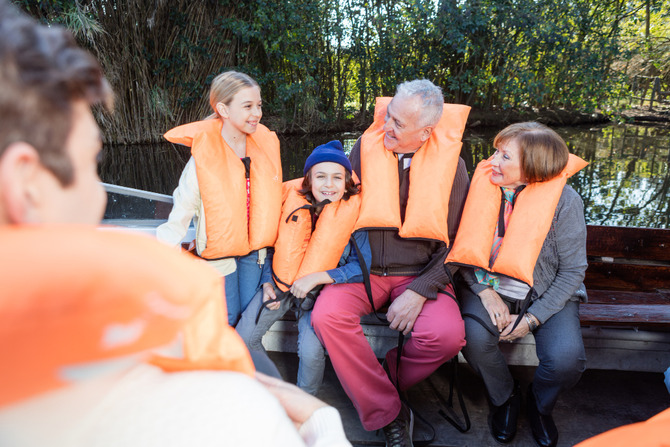
Every rider needs a properly fitted U.S. Coast Guard‑approved life jacket. For toddlers and early swimmers, choose vests with grab handles and head support; for older adults, lightweight inflatables can improve comfort if local rules and conditions allow. Pack shade canopies, kid‑safe floaties, and other pontoon boat accessories to keep everyone comfortable all day. A sturdy boarding ladder with wide steps, non‑slip mats near the swim gate, and bright throw ropes round out a thoughtful setup.
On‑Board Activities for Every Age Group
Toddlers and Little Swimmers
Keep play close to the ladder in shallow anchor spots. Silicone buckets, floating rings, and foam noodles add fun without clutter. Offer quick dips followed by warm‑up breaks under shade with snacks and storybooks. Quiet sensory play—pouring water between cups or spotting fish and birds—keeps energy steady.
School‑Age Kids and Teens
Set clear swim boundaries and a buddy system before anyone jumps in. Try gentle tow‑along games at idle speed using a line for balance, not speed, and always with life jackets on. Casting barbless hooks near weed lines, binocular “wildlife bingo,” and simple mapping challenges—marking coves and landmarks—keep curious minds engaged.
Parents and Grandparents
Bring compact hobbies that match lake life: sketchbooks, nature field guides, or a deck of cards. Create a “conversation hour” during the warmest part of the day when shade and cool drinks invite stories. Low‑impact movement—seated stretches or easy band exercises—helps older joints stay limber without leaving the deck.
Food, Hydration, and Midday Breaks
Easy Prep and Food Safety
Choose foods that travel well and minimize mess: chilled pasta salads, wraps, sliced melon, and snack boxes you can pass down a bench. Use separate coolers for drinks and perishables to limit door‑open time. Keep a small cutting board, serrated knife with sheath, biodegradable wipes, and trash bags in a dry bin so cleanup stays swift.
Hydration and Heat Management
Aim for frequent small sips rather than large chugs. Rotate in electrolyte options, and keep insulated bottles within reach of each seat. Plan shaded “cool‑down” intervals every hour: hats on, damp cooling towels out, and feet rinsed in lake water at the ladder when conditions permit.
Smooth Operations: Roles, Etiquette, and Weather Plans
Simple Crew Roles
- Dock lead: Manages lines and fenders and calls distances calmly.
- Gear chief: Tracks sunscreen cycles, water levels, and snack times.
- Swim spotter: Counts heads during water time and confirms ladder is clear.
Courtesy on the Water
Observe no‑wake zones, give bank anglers a wide berth, and keep music at a level that allows conversation on neighboring boats. When anchoring, set with care, mind swing room, and check that your ladder and swim zone don’t encroach on others.
Backup Plans for Wind or Storms
Recheck forecasts before launch and carry a printed map in case cell service fades. If wind picks up, shift to leeward shores or sheltered coves. Have a short‑run route back to the ramp and a land‑based plan—picnic at the marina pavilion or a shoreline nature walk—so the day stays enjoyable even if conditions change.
Pack Smarter: Quick‑Grab Essentials
- Safety and access: First‑aid kit, throw rope, whistle/air horn, wide‑step ladder.
- Sun and comfort: UPF clothing, hats, cooling towels, clip‑on fans, spare blankets.
- Water time: Extra kids’ vests, simple float toys, microfiber towels, dry bags.
Memory‑Making Without the Mayhem
Photos, Journals, and Quiet Moments
Capture candids early and late when light is soft and the deck is calm. A shared album keeps everyone contributing—grandparents can add captions with dates and place names that anchor the story. Encourage a short wind‑down ritual at anchor—five minutes of quiet bird‑listening or cloud‑spotting—so even the liveliest crew ends the day settled and content.
Wrapping Up a Day Everyone Enjoyed
A multi‑generational lake day works best when comfort, access, and simple fun lead the way. Choose calm water, shade the spaces people use most, and pace the activities so toddlers and grandparents both get moments that feel just right. With thoughtful gear, clear roles, and a flexible route, your pontoon becomes a floating living room where good memories come easy.