

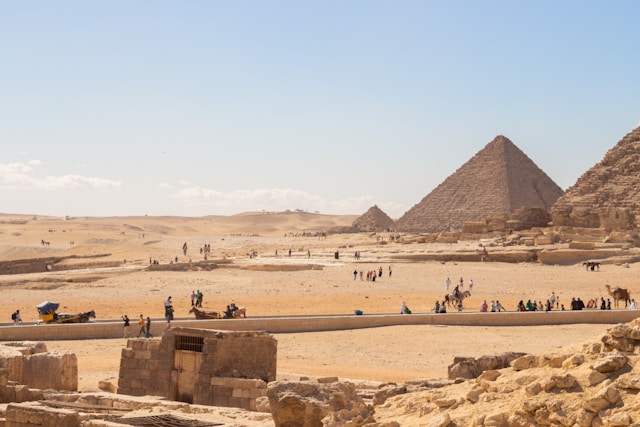
Some places are easy to explain.
Egypt isn’t one of them.
You can show photos. You can list famous landmarks. You can talk about history for hours. And yet, none of that really captures what Egypt feels like. Because Egypt doesn’t just impress you—it hits you on a deeper level. The kind that lingers long after you’ve unpacked your bags and gone back to normal life.
People often arrive expecting pyramids, temples, and a few good stories. What they leave with is something much harder to define. Awe. Humility. Perspective. Sometimes even a quiet emotional shift they didn’t see coming.
So what is it about Egypt that makes it so powerful? Why do so many travelers say it changed them in ways they didn’t expect? Let’s talk about it.
Read more:
- What Makes a Travel Experience Truly Luxurious?
- 5 Reasons Why You Should Travel to Puglia this Summer
More Than a Destination, It’s a Feeling
At first glance, Egypt looks like a checklist destination.
Pyramids? Check.
Ancient temples? Check.
The Nile? Check.
But pretty quickly, that mindset starts to fall apart.
You realize you’re not just visiting a place—you’re stepping into a story that’s been unfolding for thousands of years. And suddenly, your role as a traveler feels… smaller. In a good way. Egypt has a way of reminding you that the world existed long before you and will continue long after, and that realization can be surprisingly emotional.
It’s not dramatic or overwhelming all at once. It sneaks up on you. A quiet moment here. A sudden sense of wonder there. And before you know it, Egypt has its grip on you.
Standing Face to Face With Deep Time
There’s something unsettling—in the best possible way—about standing in a place that’s older than almost everything you know.
In Egypt, history isn’t behind glass or cordoned off with ropes. It’s right there. Massive. Solid. Unapologetic. The temples, tombs, and monuments weren’t built to be admired casually. They were built to last forever. And somehow, they almost have.
When you’re standing in front of a structure that’s thousands of years old, it’s hard not to feel small. Not insignificant, exactly—but aware. Aware of time. Of how brief a single life really is. Of how many people stood exactly where you’re standing now, each with their own hopes, fears, and stories.
It’s humbling. And strangely grounding.
You stop rushing. You stop thinking about what comes next. You’re just… there. And in a world that rarely lets us slow down, that alone feels powerful.
The Human Side of an Ancient Civilization
Here’s something many people don’t expect: Egypt isn’t emotionally powerful just because of its past. It’s because of the people living in it right now.
Daily life unfolds alongside ancient ruins in a way that feels completely natural. A local shopkeeper chats with you under the shadow of a centuries-old mosque. Kids play soccer near temple walls that predate most modern civilizations. History and everyday life aren’t separated—they coexist.
And then there’s the warmth.
Egyptians are curious, expressive, and generous with their time. Conversations happen easily. Smiles come quickly. Even brief interactions can feel meaningful. You’re not treated like a passing stranger—you’re engaged with, asked questions, pulled into small moments of shared humanity.
For travelers who want to understand these layers more deeply, some turn to resources like Inside Egypt as a way to make sense of the culture, history, and everyday rhythms they’re encountering along the way. Not to plan every detail, but to better appreciate what’s happening around them.
Because once you start noticing those layers, Egypt becomes something more than a destination. It becomes personal.
Landscapes That Quiet Your Mind
Egypt isn’t loud all the time. In fact, some of its most powerful moments are the quiet ones.
The desert, for example, has a way of stripping everything back. No distractions. No noise. Just space. Vast, endless space that forces you inward. Thoughts slow down. Breathing changes. You start noticing things you usually don’t—your footsteps, the wind, the sheer scale of the world around you.
Then there’s the Nile.
It’s not just a river. It’s a presence. Calm, steady, timeless. Watching life unfold along its banks—boats passing, people working, the sun reflecting off the water—feels almost meditative. You begin to understand why this river has been the heart of Egypt for thousands of years.
These landscapes don’t demand your attention. They invite it. And if you let them, they create moments of reflection that are surprisingly emotional.
A Journey That Pushes You (In a Good Way)
Let’s be honest. Egypt can be intense.
The sounds, the crowds, the heat, the constant movement—it’s a lot. At times, it might even feel uncomfortable. But here’s the thing: that challenge is part of what makes the experience so meaningful.
Egypt doesn’t cater to you. It doesn’t soften itself for convenience. It asks you to adapt, to be patient, to stay open even when things don’t go exactly as planned. And through that process, something shifts.
You learn to let go of control.
You learn to observe instead of judge.
You learn to meet the world on its own terms.
Those moments—when plans change, when expectations fall apart, when you’re forced to slow down—are often the ones that stick with you the most. Because growth rarely happens when everything is easy.
The Emotional Aftertaste of Egypt
Here’s a question worth asking: how many places have you visited that still cross your mind years later?
Egypt does that. A lot.
People don’t just remember what they saw. They remember how they felt. The weight of history. The kindness of strangers. The silence of the desert. The realization that the world is bigger, older, and more complex than they once thought.
Even long after leaving, Egypt has a way of resurfacing. In conversations. In quiet moments. In sudden memories that come out of nowhere.
It’s not nostalgia in the traditional sense. It’s something deeper. A sense that you were part of something much larger than yourself, even if only for a short time.
Why Egypt Isn’t a Checklist Trip
If you go to Egypt trying to “do it all,” you’ll miss the point.
Egypt isn’t about racing from site to site or collecting photos for social media. It’s about presence. About allowing space for moments you didn’t plan. About listening as much as you look.
The people who feel Egypt the most deeply are usually the ones who slow down, stay curious, and let go of rigid expectations. They’re the ones who wander a little. Sit a little longer. Ask questions. Get lost now and then.
And in return, Egypt gives them something rare: an experience that feels real, raw, and emotionally resonant.
Leaving Changed, Even If You Can’t Explain How
Not every journey needs to transform you. But some do anyway.
Egypt is one of those places. It doesn’t announce its impact. It doesn’t demand emotional reactions. It simply exists—vast, layered, alive—and lets you meet it where you are.
You might leave with better photos than you expected. You’ll almost certainly leave with more stories. But chances are, you’ll also leave with a shift in perspective. A new way of thinking about time, history, and your place in the world.
And that’s why Egypt isn’t just memorable.
It’s emotionally powerful.
Because long after the dust settles and the journey ends, Egypt stays with you. Quietly. Persistently. Like a story you’ll keep telling yourself for years to come.