

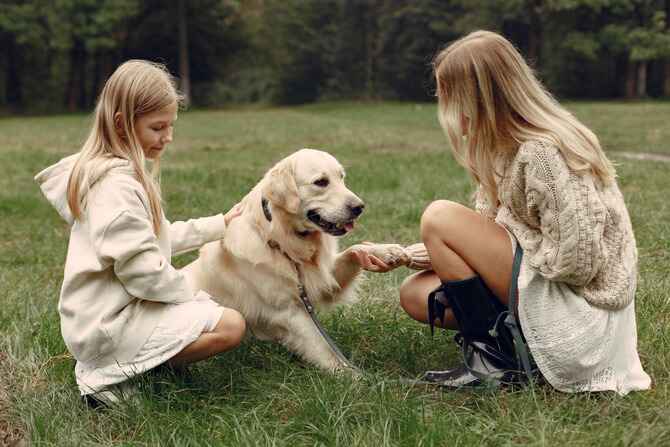
Childhood is molded by the slightest things, daily routines, emotional bonds, and relationships, which silently shape the way children perceive the world. Of them, the experience of growing up with a dog can be singled out as a particularly enriching one. A dog is more than a pet. It is usually a constant companion, a source of solace, and an active contributor in the early life of a child.
That initial relationship usually commences by picking the kind of person to have at home and in life. A Miniature Goldendoodle puppy is a good mix of playfulness, gentleness, and flexibility, which is why it would be the most suitable choice for families with children. When this bond is developed early, it forms a significant premise that can help a child to grow in more than just companionship.
Preparing Your Family for a Dog
Owning a dog is a great decision that will affect daily life, time management, and balance. With advance planning, the transition will be more successful, and one will be able to make the experience a good one for both the child and the pet.
Before adopting a dog, there are a number of factors that should be considered:
- Time for daily care
- Space for movement
- Allowance for pet expenses
- Child’s readiness level
- Long-term commitment planning
By taking them into account, your family might make sensible decisions and prevent the usual traps. Knowing the factors to consider before getting your first dog will make the process enjoyable, balanced, and win-win.
Read more:
- Top 5 Platforms to Get French Bulldog Puppies Safely and Ethically
- 5 Signs Your Dog Might Benefit From Extra Nutritional Support
- How to Keep Your Dog Healthy and Happy During a Long-Term Travel Journey
How Dogs Influence a Child’s Growth and Behavior
The dogs can be a very delicate but strong responsibility in how a child develops an image and a habit as they grow.
Emotional Security and Comfort
Dogs offer reliable and constant companionship that makes children feel safe. Their predictability makes them behave consistently, which is very useful when faced with a stressful or unfamiliar scenario.
Children tend to become strongly familiar with their pets, considering them as trusted ones that do not judge or have any expectations. This relationship can be an important factor in alleviating anxiety and suffering.
Interacting with a dog helps children unwind and express emotions. In the long run, these exchanges contribute to emotional stability. Furthermore, it teaches children to cope with their emotions in a healthy manner.
Learning Responsibility Through Daily Care
Raising a dog teaches kids to be responsible in an interesting and real-world manner. Simple activities like feeding, grooming, and making the dog comfortable help them feel secure.
These practices slowly instill discipline and nurture a sense of ownership among the children. Parents can impart these essential tips for dog owners to teach their children by using everyday situations.
This is a teaching principle that makes kids know how to take care of pets and develop responsiveness. In the long run, those habits tend to improve time management and independence in other life domains.
Social Skills and Confidence Building
Children can find social facilitators in the dogs, making it easier to establish contact with others. Informal communication with one another occurs frequently in activities such as walking the dog or playing in the communal areas.
This will create a positive atmosphere where the children can be sociable without any pressure. Also, dogs offer a low-judgment and secure communication environment.
Children interact with their pets often, reading, talking, and playing with them, and this increases their confidence. These minor yet significant exchanges contribute to the development of communication skills and self-expression in real-life scenarios.
Encouraging Physical Activity
Raising children with a dog helps them remain active through constant motion and play. Outdoor games, activities, and regular walks build up in their routine.
It can alleviate a tendency towards sedentary lifestyles and contribute to physical growth in general. An active lifestyle developed early in life often continues into adulthood.
Regular activities involving children and their pets help them develop healthy habits. Not only does this enhance fitness levels, but it also gives a boost to mental health and the energy ecosystem.
Developing Empathy and Compassion
Being around a dog helps children learn to be empathetic and to respond to another creature’s needs. Watching behavior, expressions, and reactions of a dog, the children learn to identify feelings without using words.
This mindfulness helps in improving their emotional intelligence. Children learn to be patient, kind, and responsible as they participate in the care of their pet.
Such experiences make them respect and consider others. These traits are entrenched over time, affecting their relationships and interactions with the surrounding world.
Conclusion
Raising a dog can be such a rich experience that contributes to various areas of a child’s growth. The impact of a canine companion is much more than mere companionship. This includes emotional support and empathy, as well as responsibility and physical health.
Although it involves dedication and nurture, the returns are both short-term and long-term. It has the capacity to positively contribute to nurturing balanced, humane, and assertive individuals.