

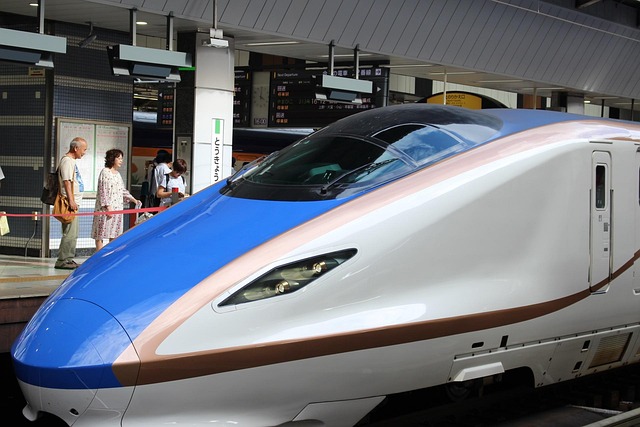
China operates the largest high-speed rail network in the world. As of 2024, the system extends across more than 45,000 kilometres of dedicated track, a figure that exceeds the combined high-speed rail infrastructure of every other country. Moreover, the network was built almost entirely within a single generation. The first high-speed line, connecting Beijing and Tianjin, opened in 2008. Since then, the system has expanded at a pace that has no precedent in the history of transport infrastructure. If you should happen to learn Chinese online, perhaos you have come across related knowledge before.
The scale of the achievement is worth understanding in more concrete terms. A journey between Beijing and Shanghai that used to take about twelve hours by conventional train now takes approximately four and a half hours at speeds reaching 350 kilometres per hour. Guangzhou and Shenzhen, two of China’s largest cities, are thirty minutes apart by high-speed rail. Chengdu and Chongqing, separated by roughly 300 kilometres of mountainous terrain, are accessible from one another in just over an hour. In each case, the effect has been to functionally collapse the distance between major urban centres in ways that have had direct consequences for economic activity.
The network was financed primarily through state investment, channelled through China Railway, the state-owned operator, and through local government borrowing. This model allowed construction to proceed at a speed that market-based financing structures would not have permitted. It also accumulated substantial debt, a fact that has generated ongoing debate within China about the long-term fiscal sustainability of the programme. Nevertheless, the infrastructure itself exists and is operational, and its effects on Chinese economic geography are not contingent on how the financing questions are eventually resolved. One of the most significant consequences of the network’s expansion has been its effect on domestic aviation. On routes where high-speed rail journey times fall below four to five hours, air travel has lost substantial market share. Airlines have withdrawn services on several domestic routes entirely, as the combination of city-centre to city-centre convenience and competitive pricing has made rail the preferred option for most business and leisure travellers. This substitution effect was a deliberate objective of Chinese transport planners and has largely been achieved on the routes where the network is most developed.
The social consequences of the network are equally significant. Internal migration in China, which has historically involved workers travelling enormous distances between rural home provinces and urban employment centres, has been affected by the reduction in travel times and costs on major corridors. The network has also made it feasible for workers to live in smaller cities with lower housing costs and commute or travel frequently to larger urban centres, a pattern that was economically and practically impossible before high-speed rail. In addition, heritage tourism has benefited considerably. Cities like Xi’an, Chengdu and Hangzhou have seen substantial increases in visitor numbers that are directly attributable to their integration into the high-speed network.
Lastly, the technology underpinning the network has itself become a subject of geopolitical significance. China initially licensed train technology from foreign manufacturers including Siemens, Bombardier and Alstom. It subsequently developed its own high-speed rolling stock through a process that foreign companies have described as forced technology transfer and that Chinese authorities characterise as legitimate domestic innovation. Regardless of how that dispute is framed, China now manufactures and exports high-speed rail technology independently, and has secured contracts to build or supply high-speed systems in several countries across Southeast Asia, Africa and the Middle East as part of the Belt and Road Initiative.