

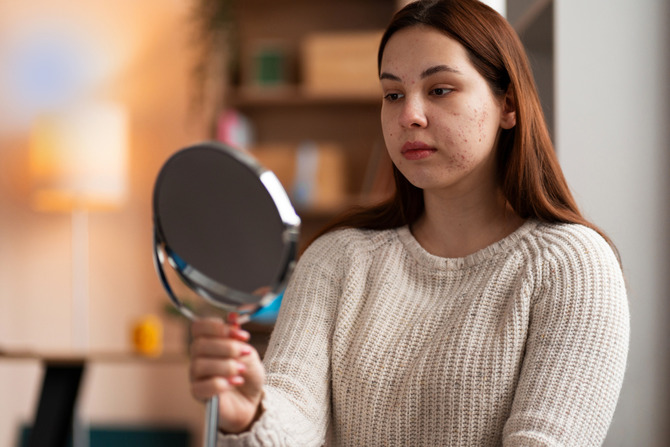
There’s a moment in every mirror routine when you pause, not because anything looks “wrong,” but because something feels a little different than it used to. Maybe it’s the faint crease between your brows that lingers even when you’re relaxed. Or the subtle lines at the corners of your eyes that seem to catch the light in a new way.
Botox has become one of those treatments people talk about in casual conversation, not whispered behind closed doors. In fact, research published through the National Institute of Health notes that Botox injections are widely used in cosmetic dermatology to reduce the appearance of fine lines and wrinkles by temporarily relaxing the underlying muscles.
In cities like Toronto, where beauty conversations feel open and refreshingly honest, the real question most people ask isn’t whether Botox works; it’s whether they are ready for it.
Before we talk about the signs, it helps to understand what Botox actually is.
Read more:
- Which Cosmetic Dermatology Treatment Is Right for You? 6 Tips
- How to Know If You’re a Good Candidate for a Facelift?
What Is Botox, Really?
Botox is a purified form of botulinum toxin that temporarily relaxes targeted facial muscles. Repeated movements like frowning, squinting, or raising your eyebrows gradually create lines in the skin, and over time those lines can remain visible even when your face is at rest.
By softening that muscle activity, Botox allows the skin to smooth, making lines appear less pronounced. The results aren’t permanent and usually last three to four months. So the real question becomes personal: when might it make sense for you?
Here are eight signs that it might be worth considering.
1. You Notice a “Tired” Expression
A subtle downward pull between the brows can create a look of frustration, even when you’re not feeling it. Fine lines around the eyes may read as fatigue. If people frequently ask whether you’re tired when you feel completely fine, that can be a sign that certain muscles are overactive.
For many people, the goal isn’t to erase expression but to refine it. Those exploring treatment options with a Botox specialist in Toronto often discover that the conversation is less about “freezing” the face and more about softening repetitive muscle patterns that create tension over time.
In consultations with Dr. Jamil Asaria, there’s typically a careful evaluation of how the brows rest, how lines form during natural expression, and how muscle patterns shift over time. The focus tends to be on preserving character while softening tension in targeted areas. His approach to injectables leans toward precise, conservative dosing, allowing results to look balanced and refreshed rather than obvious or overdone.
2. Your Expression Lines Don’t Fully Fade Anymore
Facelines, the ones that appear when you frown, smile, or raise your brows, are completely normal. Over time, however, they can become static, meaning they remain visible even when your face is at rest.
If the crease between your brows lingers after you stop concentrating, or your forehead lines stay etched even when relaxed, that’s often the first indicator that muscle movement has begun to imprint the skin.
Botox works by temporarily relaxing those targeted muscles, preventing repeated contractions that deepen lines over time.
3. Makeup Starts Settling Into Lines You Didn’t Notice Before
Sometimes the first sign isn’t in the mirror without makeup; it’s when you put it on. A foundation that once blended seamlessly now settles into faint forehead lines. Concealer creases at the corners of your eyes even after careful setting. Highlighter catches texture you don’t remember being there.
Makeup doesn’t create those lines, but it can make them more visible, especially when repetitive muscle movement has begun to etch expression patterns into the skin. Botox doesn’t change the texture directly, but by softening underlying muscle activity, it can help prevent those creases from deepening further.
Many people find that their makeup applies more smoothly and wears more evenly after treatment, which becomes an unexpected but welcome benefit.
4. You’re Interested in Preventive Aging
Treating dynamic lines early, often in the late 20s or 30s, can help slow the way they settle into the skin over time. When certain facial muscles contract repeatedly, they gradually etch those movements into the surface. By softening the muscle activity that causes those repetitive folds, Botox can reduce their intensity and give the skin a chance to remain smoother for longer.
Many aesthetic providers now view this approach as preventative rather than corrective. Instead of waiting for deep static wrinkles to fully set in, subtle treatment can help manage expression lines before they become more permanent features.
5. You Want Subtle Refinement Rather Than Dramatic Change
One of the most persistent misconceptions about Botox is that it inevitably produces a stiff appearance, when in reality, results depend almost entirely on technique and intention. When administered with precision and restraint, Botox does not erase personality or eliminate natural expression; instead, it softens specific muscle movements that contribute to repetitive lines over time.
For individuals who are looking to appear more rested or balanced without altering facial structure or adding volume, Botox often aligns more closely with those goals than treatments designed to contour or enhance.
The effect is not transformation, but refinement, a gentle easing of tension that allows your features to settle into a smoother, more relaxed version of themselves while still looking unmistakably like you.
6. You Notice One Area Is Dominating Your Face
Sometimes it isn’t about overall aging, it’s about one feature taking over. A deep glabellar line that draws attention before anything else. Forehead creases that become the first thing you see in photos. Crow’s feet that linger longer than your smile.
When a single area begins to feel visually heavier than the rest of your features, that imbalance can subtly shift how your face reads. Botox works well in these targeted situations because it allows for precision treatment. Instead of changing your entire expression, it softens the dominant muscle activity responsible for that one focal point.
That targeted approach often feels more refined and less overwhelming than treating the entire upper face at once.
Final Thoughts: When It Feels Like the Right Step
Botox isn’t about chasing youth. It’s about softening what feels heavier than it needs to be.
Fine lines and wrinkles are part of expression and experience, but when they begin to change how you feel about your reflection, it’s reasonable to explore options. The best results tend to come from subtle adjustments, realistic expectations, and providers who prioritize facial harmony over dramatic transformation.
If you recognize yourself in more than one of these signs, it may be worth having a conversation. Not because you need it, but because you’re ready to decide thoughtfully.
Sometimes the smallest refinements make the biggest difference in how confidently you move through the world.