

Ever feel like your bathroom shrinks every time you buy a new bottle of shampoo? You are not alone. Many homes built decades ago have bathrooms that feel tight by today’s standards. Families own more products now. Morning routines involve more steps. At the same time, housing prices remain high in many cities, so adding square footage is not always realistic. People are staying put and looking for smarter solutions.
Small bathrooms are not a design flaw – they are a puzzle. With the right approach, they can feel efficient and even stylish. The key is to rethink layout, storage and visual flow instead of knocking down walls. Big results often come from small shifts. In this blog, we will share practical strategies that help you create the feeling of more space, improve daily function – and turn a cramped bathroom into a room that works smarter.
Read more :
- Bathroom Changes Driven by Shared Use Rather Than Personal Preference
- What to Consider Before Updating Your Bathroom Space
- Creating Visual Flow Between Bathrooms and Living Spaces
- 10 Smart Ways to Refresh Your Bathroom Without a Full Remodel
- Turn Your Bathroom into a Luxury Spa in 10 Simple Steps
- Upgrading Your Bathroom: What to Prioritize for Functionality and Style
- Top 12 Benefits of Bathroom Remodeling
Rethink the Layout Before Adding Anything
Before buying new cabinets or shelves, step back and study the room. Where do you bump into things? What blocks movement? Layout problems often hide in plain sight.
Start by looking at the door swing. A traditional door can eat up valuable space. Switching to a pocket door or sliding barn-style door frees up floor area. This simple change can make the room feel less crowded right away.
Next, consider fixture placement. If the vanity feels bulky, explore slimmer designs. Wall-mounted sinks take up less visual weight. They expose more floor, which makes the room appear larger. Working with a trusted bathroom remodeler can help determine if plumbing lines allow for repositioning fixtures. Even moving a sink a few inches can improve flow.
Avoid cramming too many elements into one wall. Spread fixtures thoughtfully. Leave enough clearance around the toilet and shower. The room should allow easy movement. A good layout feels natural. You should not have to twist sideways to reach a towel.
Use Vertical Space Like a Pro
Most small bathrooms suffer from one common mistake. They ignore vertical space. Walls go unused while counters overflow.
Install shelves above the toilet. Add tall cabinets that reach toward the ceiling. These solutions store items without expanding outward. They pull the eye up, which makes the room feel taller. Recessed storage works even better. Built-in niches inside the shower hold soap and shampoo. Recessed medicine cabinets hide daily items behind mirrors. This keeps surfaces clear and reduces clutter.
Hooks are underrated. Replace bulky towel bars with simple hooks. They take up less wall space and hold multiple items. Over the door organizers can store hair tools or cleaning supplies.
Think of your bathroom like a small closet. Stack storage upward instead of spreading it sideways. This keeps pathways clear and reduces visual noise.
Choose Light and Reflection Wisely
Color and light change perception. Light colors reflect more brightness. Dark colors absorb it. In a small bathroom, reflection is your friend. Paint walls in soft shades like white, pale gray, or light beige. These tones create an airy feel. If a bold color is appealing, use it as an accent rather than covering every wall.
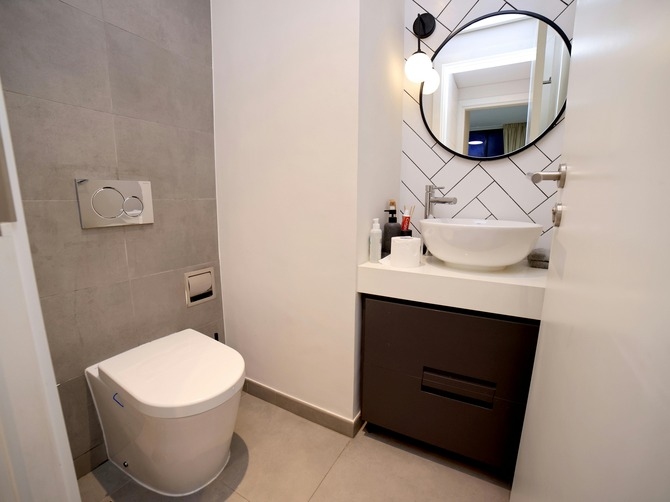
Mirrors are powerful tools for making a small bathroom feel larger and brighter. A large mirror above the vanity increases visual depth by reflecting both light and open space, which helps the room appear wider. For even greater impact, consider extending the mirror across the entire wall to create a seamless, expansive effect. Lighting works hand in hand with reflection. Install bright yet warm lights around the mirror to reduce harsh shadows that can make the space feel tight. If possible, add a subtle ceiling fixture to spread balanced light throughout the room and enhance the overall sense of openness.
Natural light is ideal. If there is a window, keep treatments minimal. Frosted glass offers privacy without blocking light.
Simplify Storage to Reduce Clutter
Clutter shrinks rooms. Even the best layout feels cramped if surfaces are crowded.
Start with a clean out. First and foremost, remove expired products. You don’t need that. Store only what is used daily within reach. Keep backups in another part of the house if possible. Use drawer organizers to separate items. Small bins prevent chaos inside cabinets. Clear containers help you see what you have.
Floating vanities offer storage while keeping the floor visible. The open space underneath adds visual breathing room. Pair this with baskets for extra towels.
Avoid oversized furniture. A compact vanity with smart storage works better than a large unit that dominates the room. Look for drawers instead of deep cabinets. Drawers allow easier access and better organization.
Make the Shower Work Harder
Showers often take up the most space in small bathrooms. Rethinking this area can unlock major gains.
Replace a bulky tub with a walk-in shower if a tub is rarely used. This opens up floor space and improves movement. Clear glass shower doors feel lighter than frosted or framed options. They allow the eye to travel across the room. Use large format tiles. Fewer grout lines create a cleaner look. This makes walls feel less busy. Extend the same tile from floor to shower walls for a seamless effect.
Add built-in niches for storage instead of hanging caddies. Remember that built-ins keep items contained and tidy. Choose a simple showerhead design that blends into the wall.
Focus on Proportion and Scale
Scale matters more than people realize. Oversized fixtures overwhelm small spaces.
Choose a vanity that fits the room. A 24-inch vanity may work better than a 36-inch one. Round mirrors soften sharp corners. Compact toilets free up inches. Keep patterns simple. Busy tiles or heavy prints can make the room feel crowded. Stick with clean lines and subtle textures.
Accessories should match scale too. Small soap dispensers and streamlined hardware look intentional. Large decorative pieces can feel intrusive.
Every element should support the goal of openness. When items fit well within the space, balance follows naturally.
The bottom line? Maximizing a small bathroom without expanding walls is not about squeezing more in. It is about using space wisely. Rethink layout. Look up, not out. Choose light colors and smart storage. Pay attention to proportion. With thoughtful planning and practical choices, even the smallest bathroom can feel open, efficient, and ready for daily life.