

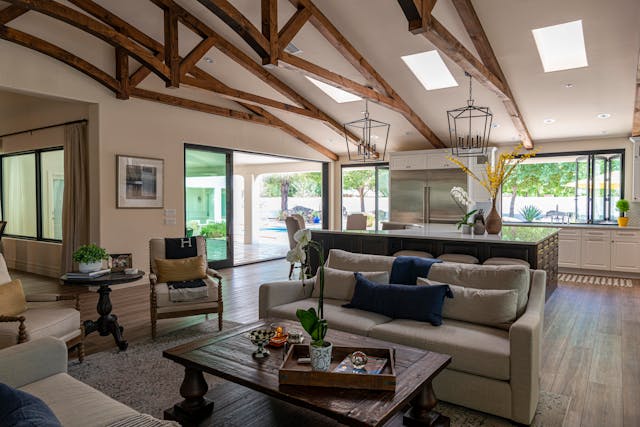
Let’s be honest for a second. When most people hear the word luxury, their mind jumps straight to price tags, brand names, or something shiny and dramatic. Marble everywhere. Gold accents. Big statements meant to impress at first glance.
But here’s the thing. The most luxurious spaces rarely shout. They whisper.
True luxury isn’t about how much something costs or how bold it looks on Instagram. It’s about how a space feels when you’re actually living in it. And that feeling comes from details most people don’t even realize they’re responding to.
Let’s talk about those.
Luxury Isn’t Loud—and That’s the Point
Think about the most comfortable, beautiful space you’ve ever been in. Not the flashiest. The one that made you exhale a little when you walked in. Chances are, it wasn’t packed with “stuff.”
That’s not accidental.
Luxury design is rooted in restraint. Knowing what to leave out is just as important as knowing what to include. Extra furniture, busy patterns, or too many statement pieces create noise. Quiet confidence comes from editing.
This is where high end design often separates itself from everything else. It’s not trying to prove anything. Every element earns its place. And because of that, the space feels calm, balanced, and intentional.
If a room feels peaceful without feeling empty, that’s a win.
Read more:
- Top Headboard Designs to Create a Relaxing Sanctuary
- Cool Dreams: Designing a Bedroom That Beats the Summer Heat
- The Ultimate Guide to Curtain Layering for a Sophisticated Home
- Maximizing Space and Style: Innovative Design Solutions by Experts
The Materials Matter More Than the Look
Here’s a simple truth: your hands know quality before your eyes do.
You feel it when you touch a solid wood table instead of veneer. When a metal handle has weight to it. When stone isn’t pretending to be something it’s not.
Luxury design leans heavily on honest materials. Not because they’re trendy, but because they age well. They develop character. They feel good over time.
Think about a leather chair that gets better with use or stone that shows subtle wear instead of damage. That’s not imperfection—it’s depth. And it’s one of the most overlooked signals of quality.
You don’t need rare materials everywhere. You just need the right ones, used thoughtfully.
It’s the Tiny Things You’d Never Think to Point Out
Here’s where it gets interesting.
Most people can’t tell you why a space feels elevated. They just know it does. That’s because the real work happens in details no one is meant to notice individually.
Things like:
- How seams line up across surfaces
- Whether drawers close smoothly without effort
- The spacing between fixtures
- The proportions of furniture relative to the room
None of these scream for attention. But together? They create a sense of ease.
When things work the way they should, your brain relaxes. You stop scanning for problems. That’s luxury.
When Everything Feels Like It Belongs Together
Have you ever walked into a space where each item is beautiful but somehow the room still feels off?
That’s usually a cohesion issue.
Luxury design isn’t about collecting great pieces. It’s about making sure those pieces speak the same language. Finishes relate to each other. Colors flow naturally from one space to the next. Nothing feels dropped in at the last minute.
This doesn’t mean everything matches. It means everything connects.
The transitions matter too. How one room leads into another. How your eye moves through a space. Even how light shifts throughout the day.
When all of that is considered, the result feels effortless—even though it’s anything but.
Luxury Is Something You Feel Before You See It
Here’s a question worth asking: how does a room make you feel?
Relaxed? Focused? Safe? Inspired?
Luxury design is deeply emotional. It’s not just visual. Lighting that’s too harsh can ruin an otherwise beautiful space. Poor acoustics can make a room feel uncomfortable no matter how nice it looks.
High-end spaces pay attention to the senses. Soft lighting where you want to unwind. Thoughtful layouts that respect privacy. Materials that feel good to touch, not just look at.
That emotional response is why people seek out high end design in the first place—even if they don’t use those words. They’re chasing a feeling. Not a style.
Why Most People Miss These Details
So why do these things go unnoticed?
Because we’re trained to focus on the obvious. Big trends. Bold visuals. The “after” photo instead of the experience.
Social media doesn’t help. It rewards what grabs attention quickly, not what holds up over time. But true luxury reveals itself slowly. You notice it when nothing feels annoying. When nothing needs fixing. When a space supports your life instead of fighting it.
That kind of quality doesn’t photograph well. But it lives beautifully.
Redefining What Luxury Really Means
Luxury isn’t excess. It’s intention.
It’s choosing fewer things—and choosing them well. It’s prioritizing comfort, quality, and cohesion over flash. It’s designing spaces that feel natural to be in, not just impressive to look at.
When you start paying attention to these overlooked details, your definition of luxury shifts. You stop chasing trends and start valuing things that last. Things that feel right.
And that’s when design stops being about appearances and starts being about living better.
Which, really, is the most luxurious thing of all.