

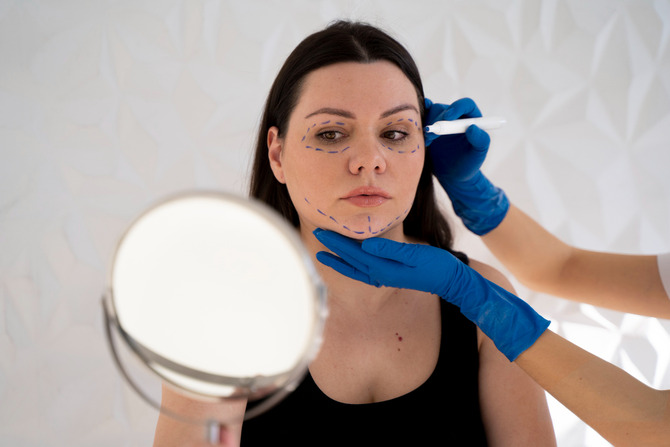
In Long Island, where family gatherings and social events are frequent, many people begin thinking about facial aging. It’s often not about looking younger. It’s about looking less tired, less drawn, or more like the person you remember seeing in the mirror years ago. Small changes tend to add up slowly. Jawlines blur and expressions linger longer than they used to.
The question that follows isn’t always “Should I get a facelift?” It’s more personal than that. Am I at the right stage for it? Would it actually help? Understanding candidacy isn’t just about age. It’s about skin condition, expectations, and how the face has changed over time.
Here are five signs that can help you understand whether a facelift might make sense for you.
Read more:
- How Do You Choose the Right Facial Rejuvenation Treatment for Your Goals?
- The Evolution of Beauty Standards: Exploring Cultural Shifts and Trends in Plastic Surgery
- Could Dermal Fillers Help You Look Younger?
1. You Notice Skin Sagging More Than Fine Lines
Fine lines are often the first thing people notice when aging begins, but they’re not always the main reason someone considers a facelift. Over time, the concern shifts from wrinkles to sagging. Cheeks begin to descend slightly. The jawline softens. The neck may start to show looseness that creams or treatments can’t fully address.
This is often when people start researching options like a facelift in Long Island to understand what can restore structure rather than just smooth the surface. At that stage, the focus moves toward lifting deeper tissue and reshaping the lower face. Techniques used in procedures performed by Dr. Parizh are centered around repositioning underlying facial layers to improve contour in a way that still looks natural.
When the main concern becomes sagging rather than wrinkles, a facelift tends to make more sense than surface-level treatments.
2. Fillers No Longer Give the Same Results
Many people begin their anti-aging journey with fillers. They soften lines and restore volume in ways that feel subtle and natural. For a while, that worked well. Then something shifts. The face might look fuller, but not necessarily more lifted.
At a certain point, adding more volume doesn’t correct the downward movement of the skin. Instead, it can create a look that feels slightly heavier. That’s when some begin to realize the issue isn’t volume anymore. It’s gravity.
This change often marks the moment when lifting becomes more relevant than filling. It’s less about smoothing and more about repositioning.
3. Your Jawline Has Lost Definition
One of the most telling signs appears along the jawline. It happens slowly. The crisp line that once separated the face from the neck starts to blur. Some people notice it when they turn their head in the mirror. Others notice it in photos.
When the definition fades in this area, it can affect the entire appearance of the lower face. Fillers can help slightly in early stages, but they don’t fully correct loose skin.
A facelift addresses the deeper layers that contribute to this shift. Restoring structure in this area can bring back a more balanced, rested appearance without changing facial identity.
4. You’re in Good Overall Health
Physical health plays a bigger role than people expect. A good candidate for a facelift is usually someone who maintains a stable weight, doesn’t have major unmanaged medical concerns, and understands that healing takes time.
Age alone isn’t the deciding factor. Some people consider a facelift in their forties. Others wait until their sixties. What matters more is how the skin has changed and how the body handles recovery.
Being healthy doesn’t mean being perfect. It simply means being in a position where the body can heal steadily and safely.
5. You’re Ready for a Longer-Lasting Solution
Temporary treatments require upkeep. Appointments, touch-ups, and adjustments become part of the routine. For some, that’s perfectly fine. For others, it starts to feel repetitive.
At a certain stage, many begin thinking about something more lasting. Just more stable. A facelift offers results that hold their shape longer and evolve gradually over time.
This doesn’t mean it’s the right choice for everyone. But when the desire shifts from quick fixes to long-term change, it can be a strong sign that the timing feels right.
Conclusion
Knowing whether you’re a good candidate for a facelift isn’t about checking a single box. It’s about noticing patterns. Skin sagging more than wrinkling. Fillers are working less effectively. The jawline is losing its shape. Feeling tired even when life is going well.
For many people, the decision forms slowly. It grows from observation rather than urgency. And when the time feels right, it’s often because the face is asking for support at a deeper level, not just surface-level care.
Understanding these signs can make the decision feel less uncertain. It becomes less about age and more about how you feel, how your features have changed, and what kind of results you hope to see moving forward.