

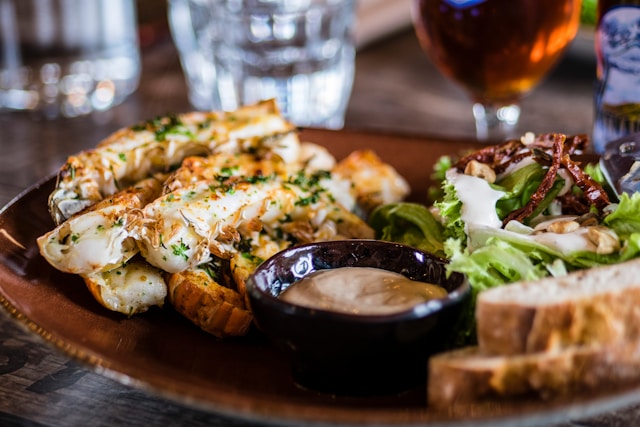
Have you ever gone somewhere beautiful, only to remember the food more than the view? It happens more than people admit. Take Gatlinburg—a place full of mountain air, winding roads, and photo-ready cabins. Yet ask someone what stood out, and they’ll talk about the biscuits, the barbecue, the jam-tasting at some roadside market. In this blog, we will share how food becomes more than a meal—and how to make it part of the experience.
Food Isn’t Background Noise
Most people plan trips around sights and schedules. Food fits in wherever there’s a gap. It becomes an afterthought, a box to check between tourist stops. That’s where they get it wrong.
Food doesn’t sit in the background—it sets the tone. It slows the pace, anchors memory, and shapes the feeling of a place. Meals aren’t just refueling breaks; they’re markers. You may forget which trail you hiked on day two, but you’ll remember the quiet of that porch, the way the cornbread came out warm, or how the smoke from the grill clung to your clothes.
This shift in thinking—treating food as part of the experience instead of separate from it—changes how people travel, how they spend, and how they connect. In places like Gatlinburg, you see this in how people choose local over chain, how small family kitchens pack lines while the parking lots of national names sit half full.
Rooted deep in family tradition, Tennessee Homemade Wines captures the flavor of the Smoky Mountains through every bottle they craft. A Gatlinburg winery like theirs isn’t just about the pour—it’s about how the process reflects the region. From the locally sourced fruits to the stories behind each batch, it’s a blend of place, people, and patience. You don’t just taste the wine. You taste where it came from.
Read more:
- Balancing Homemade and Store-Bought Snacks in Your Baby’s Diet
- What Kind of Famous Food is Seattle Known For?
- Tips for Making Dinner Feel a Little More Special
Ask Better Questions Before You Eat
Making food part of the experience doesn’t mean eating expensive. It means eating with intention. You start asking different questions. Not “What’s nearby?” or “What’s fast?” but “What feels right for right now?”
This applies whether you’re on a trip or just trying to make a Tuesday night dinner less forgettable. You ask: Am I looking for comfort or surprise? Do I want slow and drawn-out or loud and full of energy? Should this be familiar or new?
When you start with those kinds of questions, your choices get sharper. You don’t wander through three generic menus just to default to the same sandwich. You pick places that match your pace. You give yourself permission to stop and sit for a while. You learn that a simple meal hits harder when it’s not wedged between errands.
It also makes the experience more social. Good food has gravity. It pulls people in, starts conversations, sets the mood. A crowded table doesn’t need a plan. It just needs something worth passing, maybe something worth arguing over. The more food feels earned—like something chosen, not just grabbed—the more it connects.
You Don’t Need a Culinary Degree to Notice Details
People get intimidated when the conversation turns toward “making food part of the experience,” as if that requires knowing how to pronounce every cheese or having thoughts on grain-fed versus grass-fed. But noticing flavor, texture, pacing—none of that needs training. It just needs paying attention.
Anyone can spot the difference between food that’s been rushed out of a freezer and something made with care. You can feel it in how the plate looks, how the heat holds, how the server talks about it. You don’t need the language of sommeliers or the instincts of a food critic. You just need to pay attention to how you feel while you eat, and what you remember afterward.
Even at home, the same rules apply. A bowl of pasta eaten at the counter with your phone in one hand and your stress in the other won’t land the same as that same bowl eaten with music playing, plate warm, time left open. The ingredients didn’t change. You did.
So when people talk about making food part of the experience, they’re not asking you to reinvent dinner. They’re asking you to stop rushing it. Stop burying it in noise. Stop treating it like a checkpoint. You won’t get it perfect every time, but when you do, it sticks.
How to Start Making Food Part of the Experience
You don’t need to change everything. You don’t need to fly to a different city or cook with ingredients you can’t pronounce. The starting point is just attention.
Slow down. Sit for a full meal even when it’s just you. Eat with people without screens between you. Ask the server what they’d order, not just what’s popular. Let the table be more than a place to land between tasks. Let it be the point.
Plan around meals once in a while. Instead of asking “What can we eat after?” ask “What can we do after we eat?” Let the food come first. Choose places that feel grounded in where you are, not just what’s trendy. Try a new dish and don’t check the reviews first. Talk about what you’re tasting, even if it feels awkward. You’re not reviewing—you’re remembering.
At home, change one thing. Cook something slowly. Set the table like someone else is coming over, even if no one is. Light a candle without needing a reason. Make one meal a week feel like it matters. It doesn’t have to be fancy. Just different.
These small moves add up. Food starts becoming a chapter, not a footnote. It anchors the memory. It gives shape to days that would’ve blurred. You stop eating to fill space and start eating to create it.
Paragraphs
The goal isn’t to chase perfect meals. It’s to stop letting them pass unnoticed. Not every bite will be magic. Not every plate will carry a story. But the ones that do? They last. They mark something real. And when you look back, they’ll be the thing that pulls the rest into focus.