

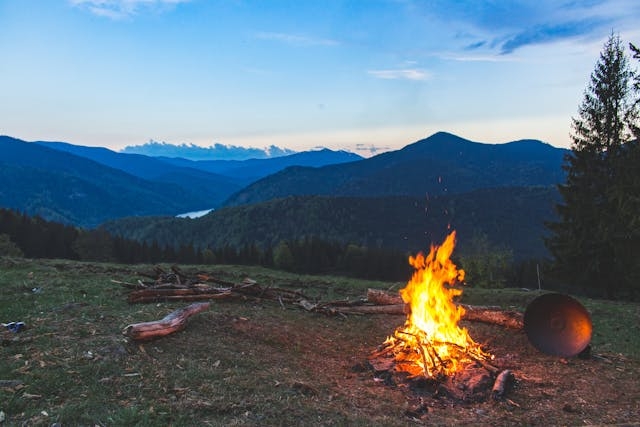
When was the last time your family sat down to dinner without someone scrolling, streaming, or multitasking? Between work emails, soccer practice, and that ever-growing list of things to do, it can feel like family time gets squeezed into the margins. In a fast-paced world, camping—especially in tranquil places like the Smoky Mountains—offers a rare and powerful way to pause, breathe, and actually enjoy each other’s company again.
Read more :
- Family Trips and Towing: How to Find the Best Clearview Mirrors for Safe Driving
- LWMFTravel Tips by LookWhatMomFound: Stress-Free Family Vacations for Every Budget
- Why Every Family Needs a Nature-Focused Adventure
- The Joys of Family Travel: Tips for a Fun and Memorable Vacation
- Discover The Top 6 Best Landscape Places In The World For Family Tour
Digital Detox Without the Drama
Screens are everywhere. The average American family now juggles five connected devices at any given time, often turning dinner into a background activity for scrolling. Camping, however, forces a reset. When you’re out in nature, cell service gets patchy, and Wi-Fi becomes a luxury instead of a need. This creates space for actual face-to-face interaction—no buffering involved.
Rather than arguing over which Netflix show to binge next, families talk around the campfire, play cards, or cook together. It’s not always Instagram-perfect, but it is real. These moments—burnt marshmallows, spooky stories, mismatched sleeping bags—are what kids remember far more than another night on the couch with screens glowing.
A Change of Scenery Sparks New Connections
Family habits at home are hard to break. Everyone retreats to their usual spots—the couch, the bedroom, the phone. But changing your physical environment changes how you interact. The act of packing up, driving out, and arriving at a quiet campground disrupts the daily autopilot.
Take a campground in the Smoky Mountains, for example. It’s not just the scenery that inspires connection. Camp RiversLanding, nestled in Pigeon Forge, offers riverside camping, full hook-up RV sites, a lazy river, and even fishing spots that kids love. Instead of negotiating screen time, families walk by the water or splash around together. Parents unwind on shaded patios while kids burn off energy in the playground. The setting invites presence—and presence leads to conversation, shared laughs, and stronger bonds.
Everyone Gets to Contribute
At home, routines usually divide labor in predictable ways—one person cooks, the other cleans, and the kids somehow vanish. Camping reshuffles these dynamics. Suddenly, someone has to pitch the tent, gather firewood, and keep the food cold. It’s a team effort, and everyone has a role.
Children often surprise their parents with how capable they can be. A nine-year-old who “can’t even load the dishwasher” at home somehow becomes the unofficial firestarter or breakfast pancake chef. When everyone pitches in, it builds a sense of pride, and more importantly, it makes each person feel needed. That’s hard to get from another chore chart on the fridge.
Nature Calms What Schedules Stir Up
Modern life demands constant motion. Between meetings, school pick-ups, and social events, families rarely get downtime where nothing is scheduled. Camping provides a much-needed counterbalance. The slower rhythm of nature has a grounding effect. Without alarms buzzing or calendars dictating the day, families can simply exist together.
Kids who are usually anxious or hyper-focused on school and sports often mellow out after a few hours in the woods. Parents who run on caffeine and stress start to notice the smell of pine or how the light changes at dusk. These quiet observations don’t require apps or schedules—they require attention. And that attention becomes a gift the whole family shares.
Conversations That Aren’t Rushed or Interrupted
One of the biggest challenges modern families face isn’t lack of love—it’s lack of time. Conversations happen in snatches: on the drive to school, during commercial breaks, or while multitasking dinner prep. Camping expands time. Without competing obligations, families have the luxury to talk without checking the clock.
Whether it’s catching up on a teen’s school drama or hearing your toddler describe a dream in great detail, these conversations deepen relationships. Laughter flows more freely when no one has somewhere else to be. There’s space to say the things that often go unsaid at home. It’s in these unhurried talks that parents learn what their kids are really thinking.
You’re Forced to Be Present, and That’s the Point
Camping removes many of the distractions that chip away at meaningful time. You can’t zone out in front of a TV or scroll endlessly when your phone battery dies and you’re sitting under a sky full of stars. You’re forced to notice what’s around you: the crackle of the fire, the way your partner laughs, how your kid insists on making s’mores their own “special” way.
That presence isn’t just good for relationships; it’s good for mental health. Studies have linked time in nature with reduced stress and increased feelings of wellbeing. When the whole family experiences that together, it’s not just a break—it’s a shared reset.
Learning Through Experience, Not Google
At home, if a question comes up, someone grabs a phone and Googles it. But on a camping trip, families are more likely to figure things out together. How do you cook eggs without a pan? What bird is making that sound? How do you read a trail map?
These moments are more than fun challenges. They’re learning experiences that bond families. Kids learn by doing—and watching their parents navigate without defaulting to YouTube tutorials teaches resilience. And when everyone messes up together (hello, soggy sleeping bags), those stories become family legends that last longer than any viral TikTok.
It Doesn’t Have to Be Perfect to Be Meaningful
Let’s be honest—camping doesn’t always go smoothly. Maybe it rains all weekend. Maybe you forget the bug spray. Maybe someone gets a little too enthusiastic with the marshmallow roasting stick. But these imperfections are part of what makes the experience memorable.
In a world obsessed with curated moments and perfect family photos, camping reminds us that connection comes from authenticity, not perfection. It’s the muddy shoes, the shared jokes over bad coffee, and the whispered goodnights in a too-small tent that make the trip unforgettable. The kind of connection families find out there in the woods doesn’t require perfection—it just requires time, attention, and a willingness to unplug.
So if your family feels like it’s stuck in the routine of fast dinners, full calendars, and too many screens, maybe it’s time to consider a weekend away under the trees. Somewhere quiet. Somewhere simple. Somewhere like Camp RiversLanding, where the river runs slow and the Wi-Fi doesn’t interrupt dinner. Because sometimes, the best way to reconnect is to disconnect—together.